
Indian Economy 2026: Growth, Challenges and Future Prospects
Contents
Introduction
The Indian economy is one of the major economies in the world and plays an important role in global economic development. India has a large population, a growing domestic market, a strong services industry, and an expanding manufacturing sector. In 2026, the country continues to focus on economic growth, infrastructure development, digital transformation, employment generation, and improving living standards.
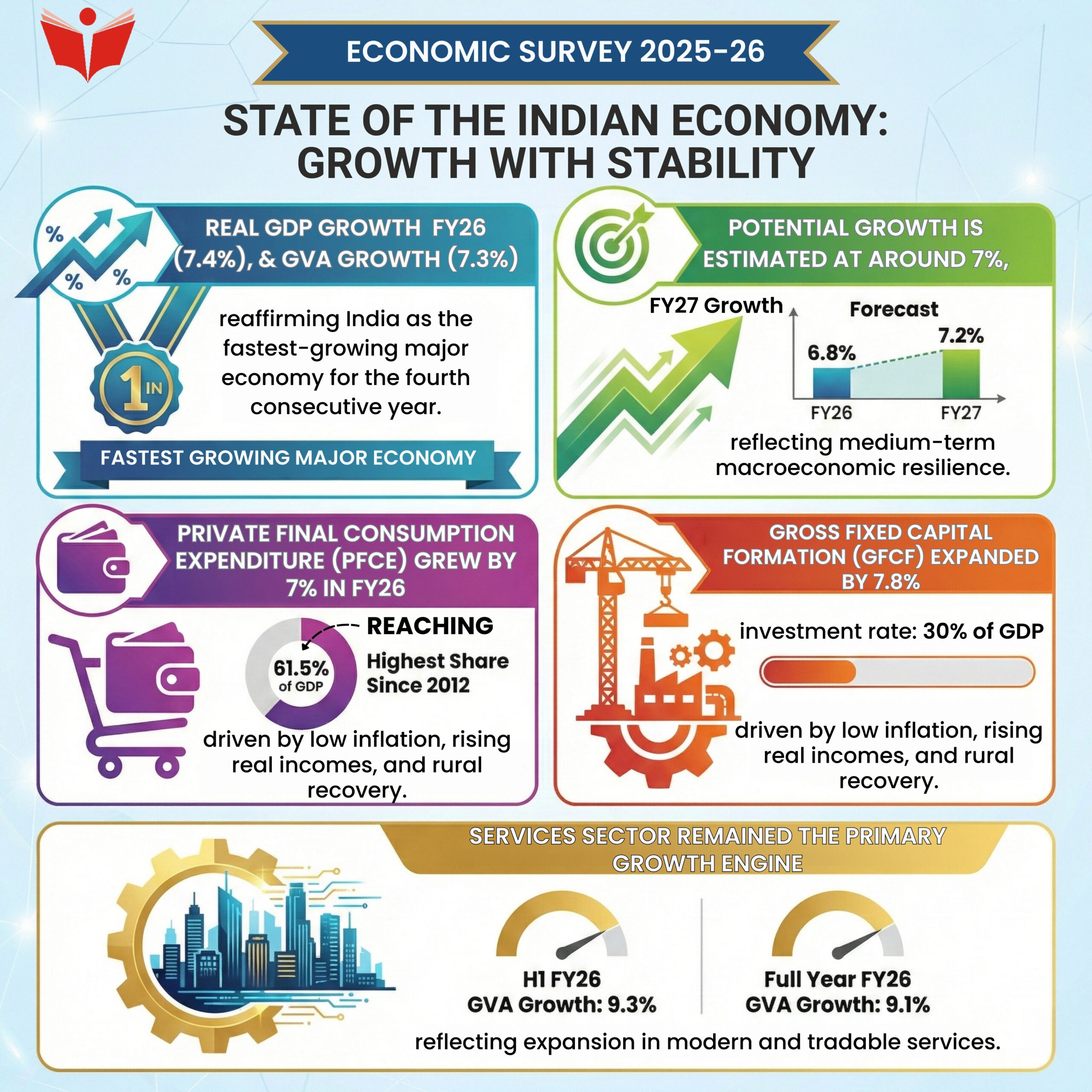
According to the World Bank’s October 2026 India Development Update, India’s economy is projected to grow by 7.1% in the 2026–27 financial year, supported by domestic demand and exports, although global economic risks remain.
Understanding the Indian economy is important for students, businesses, investors, and citizens because economic changes influence jobs, prices, income, savings, and everyday life.
1. What Is the Indian Economy?
The Indian economy refers to the system through which India produces, distributes, and consumes goods and services. It includes agriculture, industries, manufacturing, banking, transportation, education, healthcare, information technology, tourism, and many other activities.
India follows a mixed economic system in which both the government and private businesses participate in economic activities. The government provides public services and infrastructure, while private companies contribute to production, investment, innovation, and employment.
Economic growth is commonly measured through Gross Domestic Product (GDP). GDP represents the total value of final goods and services produced within a country during a particular period.
However, economic development is broader than GDP growth. It also includes improvements in education, healthcare, employment opportunities, income distribution, and quality of life.
2. India’s GDP Growth in 2026
GDP growth is one of the most important indicators of economic performance. A growing economy can create opportunities for businesses, increase production, and support the development of infrastructure.
India’s economic outlook remains positive, although forecasts differ between institutions and can change as domestic and international conditions evolve. The World Bank’s October 2026 forecast puts growth at 7.1% for FY2026–27.
Several factors support India’s economic growth:
-
Strong domestic consumption and demand.
-
Government spending on roads, railways, and other infrastructure.
-
Expansion of digital services and financial technology.
-
Growth in manufacturing and business services.
-
Investment by domestic and international companies.
-
Increasing opportunities in technology and exports.
Nevertheless, economic growth alone does not guarantee that every household will experience higher incomes. The benefits of growth depend on job creation, wages, access to education, and the distribution of economic opportunities.
3. Agriculture and the Indian Economy

Agriculture remains an essential part of India’s economy. Millions of people depend on farming and related activities for their livelihoods. The agricultural sector also supplies food, raw materials, and inputs for several industries.
Major agricultural products include rice, wheat, tea, cotton, sugarcane, pulses, fruits, and vegetables.
The performance of agriculture depends on rainfall, irrigation, soil quality, farming technology, market access, and government policies. Climate change and irregular monsoon patterns can affect agricultural production and farmers’ incomes.
To strengthen the sector, India needs better irrigation facilities, modern farming equipment, storage infrastructure, agricultural research, and access to markets. Food processing and agricultural exports can also create additional opportunities for rural communities.
4. Manufacturing and Industrial Development

Manufacturing is another important driver of economic development. It includes the production of automobiles, electronics, textiles, machinery, medicines, steel, and consumer goods.
A stronger manufacturing sector can reduce dependence on imported products, improve export performance, and create employment opportunities for skilled and semi-skilled workers.
Government initiatives supporting domestic production and industrial investment aim to strengthen India’s position in global supply chains.
However, manufacturing faces several challenges, including logistics costs, access to finance for smaller businesses, technology gaps, and the need for a skilled workforce.
India’s long-term industrial progress will depend on improving productivity, encouraging innovation, supporting small businesses, and creating a business environment that attracts investment.
5. The Services Sector and Digital Economy

The services sector is a major contributor to India’s economic activity. It includes information technology, banking, telecommunications, education, healthcare, tourism, transportation, and professional services.
Indian IT companies provide software development, consulting, business process services, and technology solutions to clients around the world.
Digital payments have also transformed financial transactions. Platforms using India’s digital payment infrastructure allow individuals and businesses to make payments electronically, helping support online commerce and access to financial services.
Other growing areas include artificial intelligence, cloud computing, cybersecurity, online education, and digital entrepreneurship.
The government and businesses can help more people benefit from these developments by improving internet access, digital literacy, and technical education.
6. Employment and Unemployment Challenges
Employment is one of the most important issues facing the Indian economy. A growing population creates demand for new jobs, particularly for young people entering the workforce.
Although sectors such as technology, construction, healthcare, logistics, and manufacturing offer opportunities, job seekers may face difficulties finding suitable work.
One challenge is the gap between educational qualifications and the skills employers require. Another is the availability of stable, well-paid employment in smaller cities and rural areas.
To address these problems, India needs:
-
High-quality vocational and technical education.
-
Practical training and apprenticeship programmes.
-
Support for small and medium-sized businesses.
-
More labour-intensive manufacturing.
-
Better access to employment information.
-
Opportunities for entrepreneurship and innovation.
Economic progress should be measured not only by GDP growth but also by the number and quality of jobs created.
7. Inflation and the Cost of Living
Inflation refers to a sustained increase in the general price level of goods and services. When prices rise faster than household incomes, families may find it harder to afford food, housing, transport, education, and healthcare.
Food prices can be influenced by weather conditions, harvests, transportation costs, and supply disruptions. Fuel prices and international commodity markets can also affect production and distribution expenses.
The Reserve Bank of India uses monetary policy to help maintain price stability while considering economic growth. Government policies relating to food supply, taxation, and infrastructure can also influence prices.
Keeping inflation under control is important because stable prices help households plan their spending and businesses make investment decisions.
8. Infrastructure and Foreign Investment

Infrastructure development supports economic growth by improving connectivity and reducing the cost of moving goods and people.
Roads, railways, airports, ports, electricity networks, and digital infrastructure help businesses reach customers and connect with suppliers.
Foreign direct investment can bring capital, technology, management expertise, and access to international markets. However, investors also consider policy stability, infrastructure quality, workforce skills, and the ease of doing business.
India can strengthen its investment environment by improving logistics, simplifying appropriate regulatory procedures, supporting research and development, and ensuring predictable policies.
9. Major Challenges Facing the Indian Economy
Despite its opportunities, India faces several economic challenges.
Income inequality: Economic gains are not always shared equally across regions, occupations, and households.
Unemployment and underemployment: Some workers struggle to find stable jobs that match their skills.
Rural development: Many rural communities need better infrastructure, healthcare, education, and non-agricultural employment.
Environmental concerns: Pollution, water scarcity, extreme weather, and climate change can affect health and productivity.
Global uncertainty: Changes in oil prices, international trade, geopolitical tensions, and global financial conditions can influence India’s economy.
Skills and technology: Workers and businesses need access to relevant training and modern technology to remain competitive.
Addressing these issues requires effective policies, investment in human development, and cooperation between government, businesses, educational institutions, and communities.
10. Future Prospects of the Indian Economy
India has several opportunities to strengthen its economy in the coming years. Its large domestic market, expanding digital infrastructure, entrepreneurial activity, and skilled professionals can support continued development.
The World Bank has also highlighted India’s potential to benefit from artificial intelligence, supported by its technical workforce and digital public infrastructure.
Important areas for future development include renewable energy, electronics manufacturing, tourism, agricultural technology, healthcare, education, and digital services.
To achieve sustainable progress, India will need to improve education and healthcare, encourage productive investment, create quality jobs, strengthen agricultural resilience, and reduce regional inequalities.
Economic policies must also balance industrial development with environmental protection. Clean energy, efficient public transport, water conservation, and sustainable farming can help build a more resilient economy.
Conclusion
The Indian economy in 2026 presents a combination of strong growth potential and important development challenges. Agriculture supports rural livelihoods, manufacturing contributes to industrial development, and the services sector provides opportunities in technology and business.
However, continued progress requires more quality employment, stable prices, stronger infrastructure, improved skills, and greater access to economic opportunities.
The future of the Indian economy will depend not only on how quickly GDP grows, but also on how effectively that growth improves people’s lives.