
Assam Economy: Growth, Industries, Agriculture and Future Prospects
Contents


Introduction to the Assam Economy
Assam is one of the most important states in Northeast India, known for its natural resources, tea gardens, agricultural production, oil and natural gas industries, and rich cultural heritage. Its strategic location makes it an important connection between the northeastern region and other parts of India.
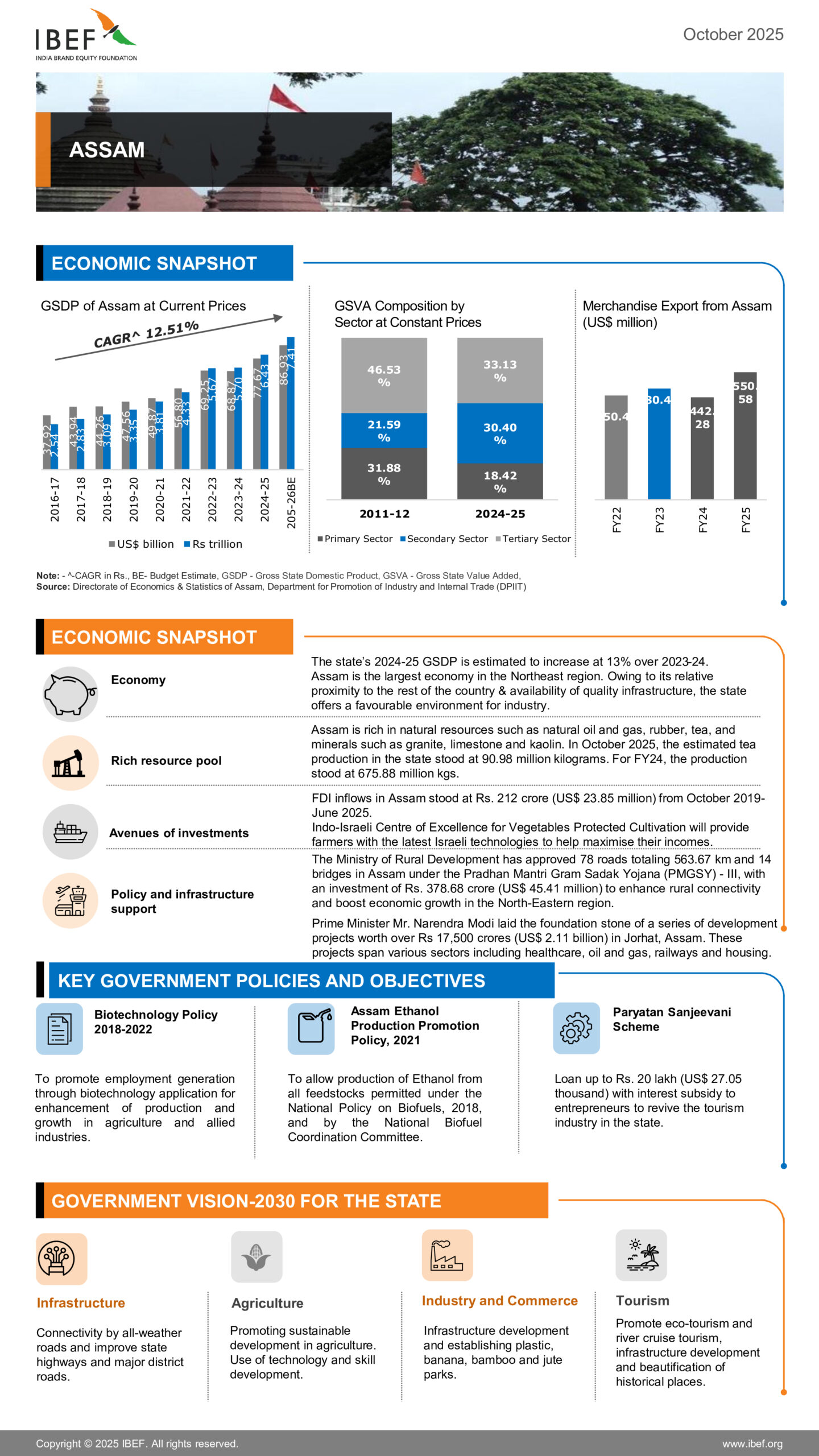
The Assam economy is developing through agriculture, manufacturing, tourism, trade, transportation, and service-based businesses. According to the Economic Survey of Assam 2025–26, the state’s Gross State Domestic Product (GSDP) at current prices is estimated at approximately ₹7.45 lakh crore for the financial year 2025–26. This is an advance estimate, not a final figure.
The state’s economic development is important for employment generation, improving living standards, expanding businesses, and creating opportunities for young people.
1. Agriculture: The Foundation of Assam’s Economy

Agriculture remains a major source of livelihood in Assam, especially in rural areas. The state’s fertile alluvial soil, river systems, and monsoon climate support the cultivation of various crops.
Major agricultural products include:
-
Rice, the principal food crop.
-
Mustard and other oilseeds.
-
Jute and pulses.
-
Vegetables and fruits.
-
Banana, pineapple, and citrus fruits.
Agriculture also supports dairy farming, poultry, fisheries, and other rural activities. However, floods, soil erosion, changing weather conditions, and limited access to modern technology can affect agricultural productivity.
Better irrigation, improved storage facilities, modern farming techniques, food processing, and direct market access can help farmers increase their earnings.
2. Tea Industry: Assam’s Economic Identity

The tea industry is one of the most recognisable parts of the Assam economy. Assam is internationally famous for its strong-flavoured tea, which is consumed in India and exported to different countries.
Tea cultivation supports tea garden workers, small tea growers, processing factories, packaging businesses, transport operators, and traders. It also contributes to the state’s exports and regional identity.
According to the India Brand Equity Foundation, tea accounted for approximately 45.88% of Assam’s total exports in FY 2025–26, with tea exports valued at around ₹1,858.75 crore.
The industry can grow further through better processing technology, quality control, branding, digital marketing, and stronger international distribution networks. Improving working conditions and supporting small tea growers are also important for sustainable development.
3. Oil, Natural Gas and Other Industries

Assam has a long history of petroleum production and refining. Oil and natural gas are important natural resources that contribute to industrial activity, energy supply, and employment.
Important industrial activities include:
-
Petroleum refining and natural gas production.
-
Petrochemicals and chemical-related industries.
-
Coal and limestone-related activities.
-
Cement manufacturing.
-
Food processing and packaging.
-
Handloom, handicrafts, and small-scale manufacturing.
The state’s industrial development can create opportunities for engineers, technicians, skilled workers, entrepreneurs, and transport businesses.
However, Assam needs further industrial diversification so that economic growth does not depend excessively on a limited number of industries. Cleaner production methods and responsible resource management are also essential.
4. Tourism and the Hospitality Sector

Tourism is another promising part of the Assam economy. The state attracts visitors through wildlife, natural landscapes, historical sites, religious destinations, festivals, and traditional culture.
Popular attractions include Kaziranga National Park, Majuli, Kamakhya Temple, Sivasagar’s historical monuments, and the Brahmaputra River.
Tourism supports hotels, restaurants, local transport, tour guides, handicraft sellers, and small businesses. Cultural festivals and local food traditions can also attract visitors.
To strengthen this sector, Assam needs quality accommodation, reliable transport, improved tourist information, cleanliness, trained guides, and responsible wildlife tourism. Protecting forests, rivers, and cultural heritage is equally important for long-term growth.
5. Infrastructure and Connectivity
Roads, railways, airports, bridges, and waterways are essential for economic development. Better connectivity can reduce transportation costs and help farmers and businesses reach larger markets.
Guwahati serves as an important commercial and transportation centre for Northeast India. Improvements in regional connectivity can support trade, logistics, tourism, education, and healthcare.
Assam’s location also gives it potential to strengthen trade connections with other northeastern states and neighbouring countries. Continued investment in reliable infrastructure can encourage new businesses and attract investors.
6. Employment and Business Opportunities
The growth of the Assam economy creates opportunities in both traditional and emerging sectors.
Potential areas include:
-
Food processing and agricultural businesses.
-
Tea packaging, branding, and distribution.
-
Tourism services and homestays.
-
Handloom and handicraft sales.
-
Information technology and digital services.
-
Transportation and warehousing.
-
Small manufacturing enterprises.
-
Online retail and digital marketing.
Small businesses can be particularly important in rural and semi-urban areas. Skill development, access to finance, reliable internet connectivity, and entrepreneurship training can help young people participate in economic growth.
At the same time, employment quality matters. Workers need fair wages, safe working conditions, and opportunities to improve their skills.
7. Challenges Facing the Assam Economy
Despite its economic potential, Assam faces several challenges.
Floods and erosion: Seasonal flooding can damage crops, houses, roads, and other infrastructure.
Limited industrial diversification: Some areas need more manufacturing facilities and private-sector investment.
Employment concerns: Young people need access to suitable jobs and practical vocational training.
Market access: Farmers and small producers may face difficulties with storage, transportation, processing, and fair prices.
Environmental pressures: Industrial pollution, forest loss, and unsustainable resource use can threaten long-term development.
Addressing these challenges requires coordinated planning, stronger infrastructure, improved education, effective disaster management, and environmentally responsible investment.
8. Future Prospects of the Assam Economy
The future of Assam depends on its ability to combine traditional economic strengths with new industries and technologies.
Agricultural modernisation can improve productivity, while food processing can create additional value within the state. The tea industry can expand through premium products and better marketing. Tourism can generate income for local communities, while technology and logistics businesses can create new employment opportunities.
Government policies, private investment, entrepreneurship, and skill development will all play important roles. Economic progress should also reach rural communities and smaller towns rather than being concentrated in a few urban centres.
A balanced development strategy can help Assam build a more diverse, resilient, and sustainable economy.
Conclusion
The Assam economy has considerable potential because of its agricultural resources, world-famous tea industry, petroleum sector, tourism attractions, and strategic location in Northeast India. Continued improvements in infrastructure, education, industrial development, and market access can strengthen the state’s economic future.
The main objective should be to ensure that economic growth creates meaningful employment, supports farmers and small businesses, protects the environment, and improves living standards across the state.
With sustainable planning and greater economic diversification, Assam can strengthen its position as an important economic centre in Northeast India.
Frequently Asked Questions (FAQs)
1. What are the main industries of Assam?
The main industries include tea production, agriculture, petroleum refining, natural gas, cement, tourism, food processing, and handloom.
2. What is the main source of livelihood in rural Assam?
Agriculture and related activities are important sources of livelihood for many rural households.
3. What is the estimated GSDP of Assam in 2025–26?
The advance estimate at current prices is approximately ₹7.45 lakh crore, according to the Economic Survey of Assam 2025–26.
4. What are the major challenges for Assam’s economy?
Major challenges include floods, riverbank erosion, employment needs, limited industrial diversification, and environmental pressures.
5. Which sectors could support future economic growth in Assam?
Agriculture, food processing, tea exports, tourism, information technology, logistics, and small businesses could contribute to future growth.