
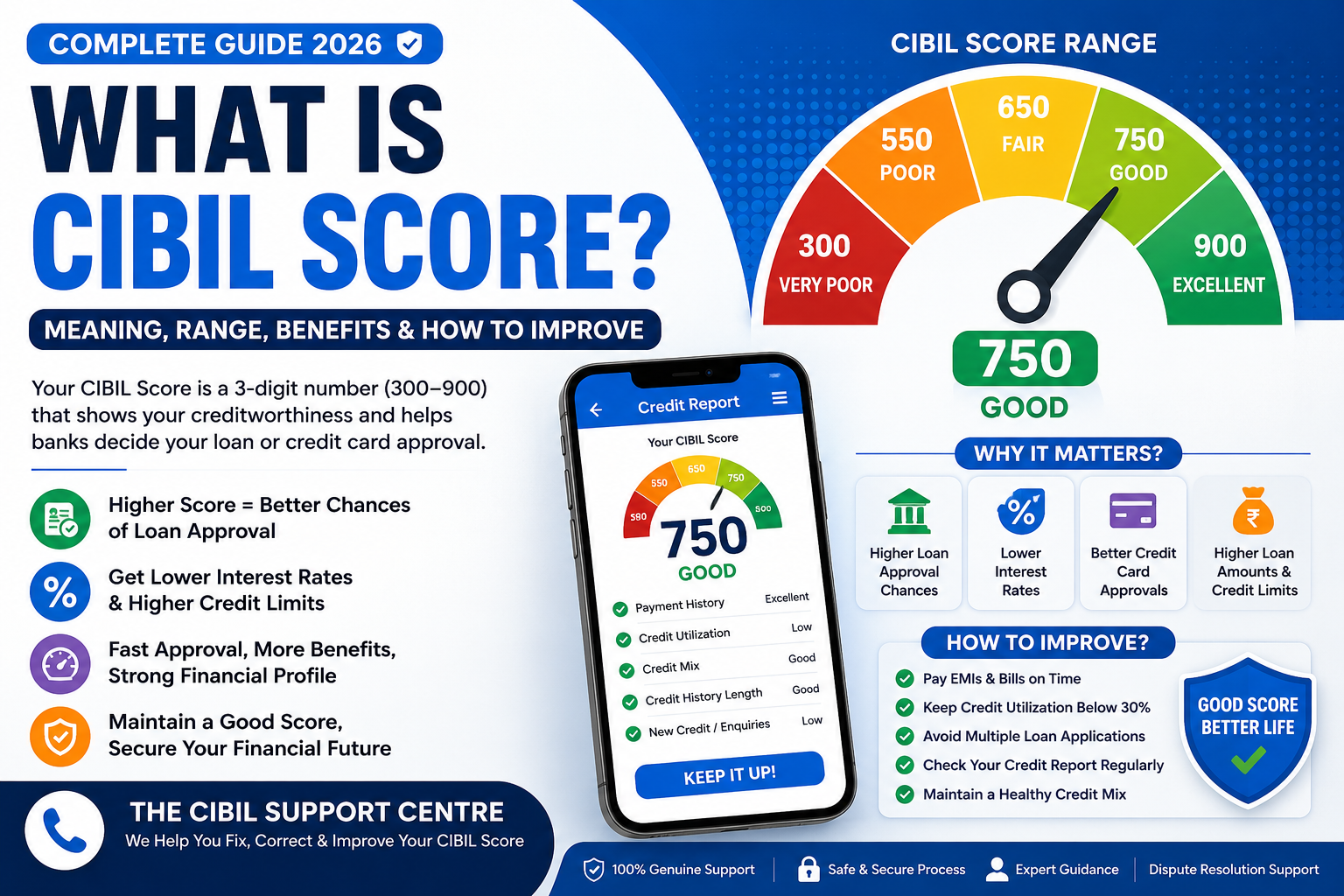
What is a CIBIL Score? A Complete Guide to Understanding Your Credit Score in India (2026
Contents

In today’s digital banking era, your CIBIL Score plays a crucial role in determining your financial credibility. Whether you are applying for a personal loan, home loan, car loan, business loan, or a credit card, lenders often check your CIBIL score before making a lending decision.
If you have ever wondered “What is a CIBIL Score?”, “How is it calculated?”, or “How can I improve my CIBIL score?”, this comprehensive guide will answer all your questions.
What is a CIBIL Score?
A CIBIL Score is a three-digit numeric representation of your creditworthiness that ranges from 300 to 900. It is generated by TransUnion CIBIL Limited, India’s first and one of the leading Credit Information Companies (CICs).
The score is calculated using your credit history, including:
Loan repayment history
Credit card payment history
Outstanding loan balances
Credit utilization
Loan enquiries
Credit account age
A higher score indicates that you have managed your credit responsibly and are considered a lower-risk borrower by banks and financial institutions.
What Does a CIBIL Score Mean?
| CIBIL Score | Rating | Loan Approval Chances |
| ———– | ——— | ——————— |
| 800–900 | Excellent | Very High |
| 750–799 | Very Good | High |
| 700–749 | Good | Good |
| 650–699 | Fair | Moderate |
| 550–649 | Poor | Low |
| Below 550 | Very Poor | Very Difficult |
Most banks prefer applicants with a CIBIL Score of 750 or above.
Why is a CIBIL Score Important?
A good CIBIL score offers several advantages:
Faster loan approval
Better chances of credit card approval
Lower interest rates
Higher loan eligibility
Higher credit card limits
Better negotiation power with lenders
Improved financial credibility
How is a CIBIL Score Calculated?
Although the exact algorithm is confidential, the following factors significantly influence your score.
1. Repayment History (Most Important)
Timely payment of EMIs and credit card bills positively impacts your score.
Late payments, defaults, or missed EMIs can significantly reduce it.
Thank you, please upcoming article